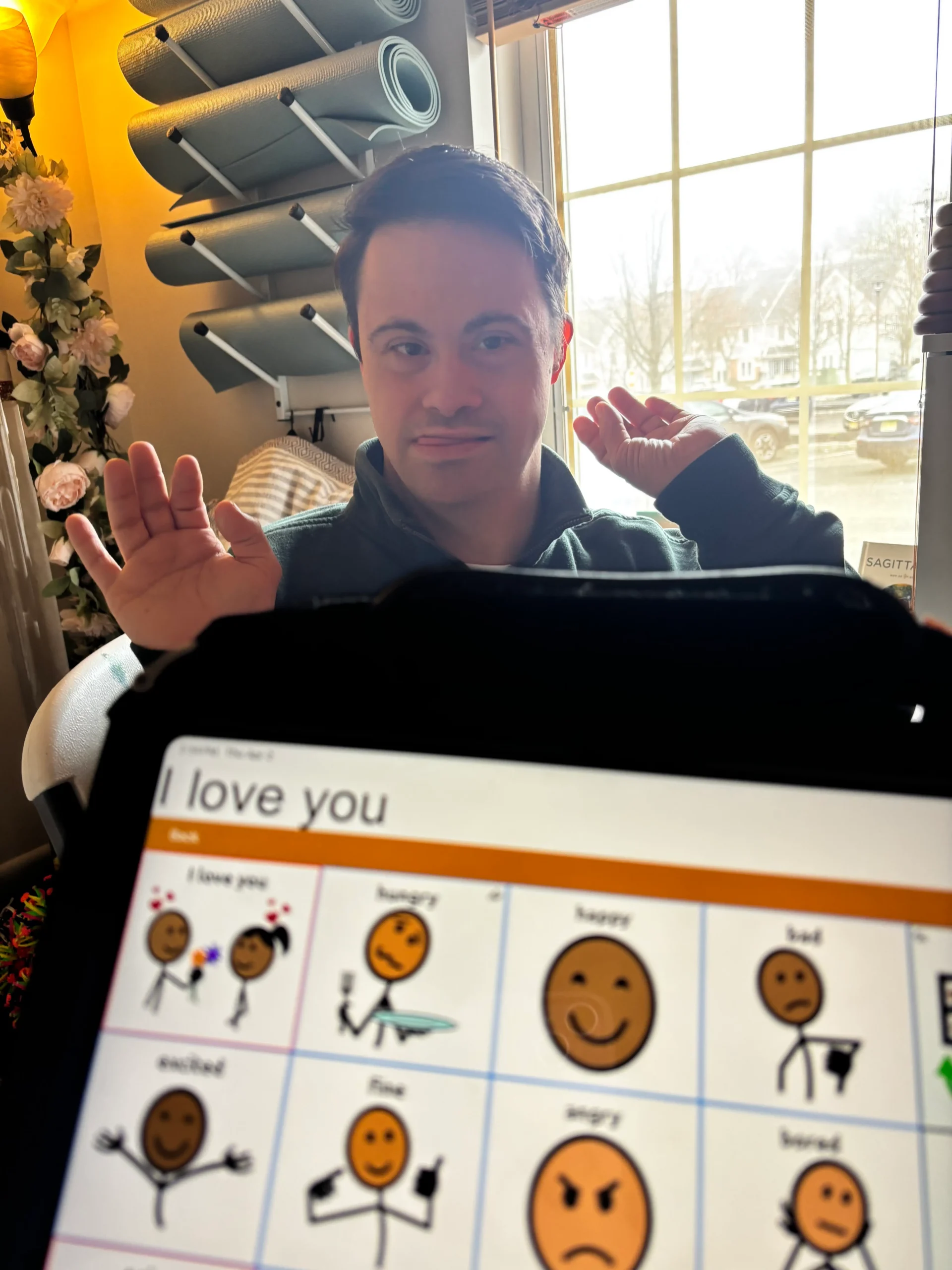
As a parent, you’ve likely spent hours, maybe even years, hanging onto every sound, every syllable, and every attempt your child makes to speak. You’ve celebrated the first "mama," the first "dada," and maybe even the first frustrated "no." But for many families in Monmouth County, there comes a point where those sounds aren't coming as quickly as expected, or maybe they aren't forming into the clear sentences you hoped for.
When a therapist first mentions AAC (Augmentative and Alternative Communication), it can feel like a heavy moment. You might feel a pang of worry, wondering: "Does this mean they’ll never talk?" or "Are we giving up on their voice?"
At The Therapy Garden, we’re here to tell you something transformative: AAC is not a last resort. It is a powerful, functional doorway to your child’s voice.
In this post, we’re going to peel back the layers of mystery around AAC, bust the most common myths, and show you why this tool might be exactly what your child needs to finally say what’s in their heart.
What is AAC, Anyway?
Before we dive into the "why," let’s talk about the "what." AAC stands for Augmentative and Alternative Communication.
- Augmentative means it adds to someone’s speech.
- Alternative means it provides a different way to communicate when speech isn't working.
It’s not just a high-tech tablet with buttons (though those are amazing!). AAC is a spectrum. It includes:
- Gestures and Signs: Using hands to show "more" or "all done."
- Low-Tech Visuals: Pointing to pictures on a board or using "First/Then" cards during play.
- High-Tech Devices: Tablets or dedicated devices with specialized software that "talks" for the user.
Whether it’s a toddler using a picture card to ask for a snack or an adult with developmental disabilities using a device to share a joke, AAC is about one thing: Connection.

Myth-Busting: The Truth About AAC and Talking
There is a lot of misinformation out there that can make parents hesitant to start AAC. Let’s set the record straight with some heart-centered facts.
Myth 1: "If my child uses a device, they’ll get 'lazy' and stop trying to talk."
The Truth: This is the biggest fear we hear, and it’s actually the opposite of what happens! Research consistently shows that AAC often helps natural speech develop.
Think of AAC like training wheels on a bike or a bridge over a gap. When a child can finally get their point across without a meltdown, their frustration levels drop. This "success" actually motivates them to communicate more. Many children begin to vocalize more once they have a device because they finally understand the power of their words.
Myth 2: "My child isn't 'ready' or is too young for AAC."
The Truth: There is no "readiness" requirement for communication. If a child is struggling to be understood, they are ready for support. We’ve seen incredible breakthroughs with toddlers as young as 18 months using simple visual supports. By starting early, we provide the cognitive and linguistic foundation they need for the future.
Myth 3: "AAC is only for kids who are completely nonverbal."
The Truth: AAC is for anyone whose speech is not reliable, functional, or clear.
We work with many children who can speak but struggle to express complex needs when they are tired, frustrated, or in a loud environment like a restaurant or a birthday party. AAC acts as a backup system, ensuring they always have a voice, no matter the circumstances.
Empowering Real-World Success
At The Therapy Garden, we don't just sit in a clinical room and push buttons. Our approach is functional. We want your child to take these skills out into the Monmouth County community!
Imagine your child being able to:
- Master the Menu: Using their device to order their favorite chocolate milk at a local café.
- Build Friendships: Bringing their visual board to a social skills group to ask a peer, "Can I play?"
- Express Needs: Clearly telling you "My tummy hurts" or "I’m scared" instead of having to rely on a meltdown to show you they are in pain.
When we empower a child with the right tools, we aren't just teaching them a "task": we are giving them the keys to independence.

Why Visual Supports Matter (Like Magnetic Blocks!)
One of the most common ways we introduce AAC is through visual supports during play. If you’ve visited our space, you might have seen us playing with magnetic blocks. While we build towers, we use "core boards" or specific picture icons to model words like:
- "Up"
- "More"
- "Crash!"
- "My turn"
By seeing the word as they hear it and see the action, the child’s brain makes a much stronger connection. These visual supports act as a roadmap for their thoughts, helping them organize what they want to say before they even try to say it.
We Are Your Partners in Success
We know the journey can feel overwhelming. Navigating insurance, choosing the right device, and learning how to use it at home is a lot for any family. That’s why we position ourselves as your partner in success.
At The Therapy Garden, we offer:
- AAC Guidance: Helping you navigate the process of finding the right system for your child’s unique patterns.
- Neuro-Affirming Care: We celebrate the way your child communicates now while building the skills they need for the future.
- DDD-Approved Programs: For our adult learners, we provide social and communication support that focuses on daily living and community integration.
We believe that every individual has something to say. Our job is simply to give them the megaphone.

Ready to Find Your Child’s Voice?
If you’ve been wondering if AAC might be the "missing piece" for your loved one, don't wait. We offer a Free Consultation to discuss your child’s needs in a low-pressure, supportive setting.
Whether you’re in Long Branch, Middletown, or anywhere in Monmouth County, our dedicated therapists are here to help you unlock the potential that’s already inside your child.
Let’s grow together.
- Schedule Your Free Consultation Today
- Explore Our Speech Therapy Services
- Check Out Our DDD-Approved Social Groups
No Obligation. Just Genuine Support.
Take the first step toward a more communicative future today. We currently have limited openings: secure your spot for a transition that could change everything.
