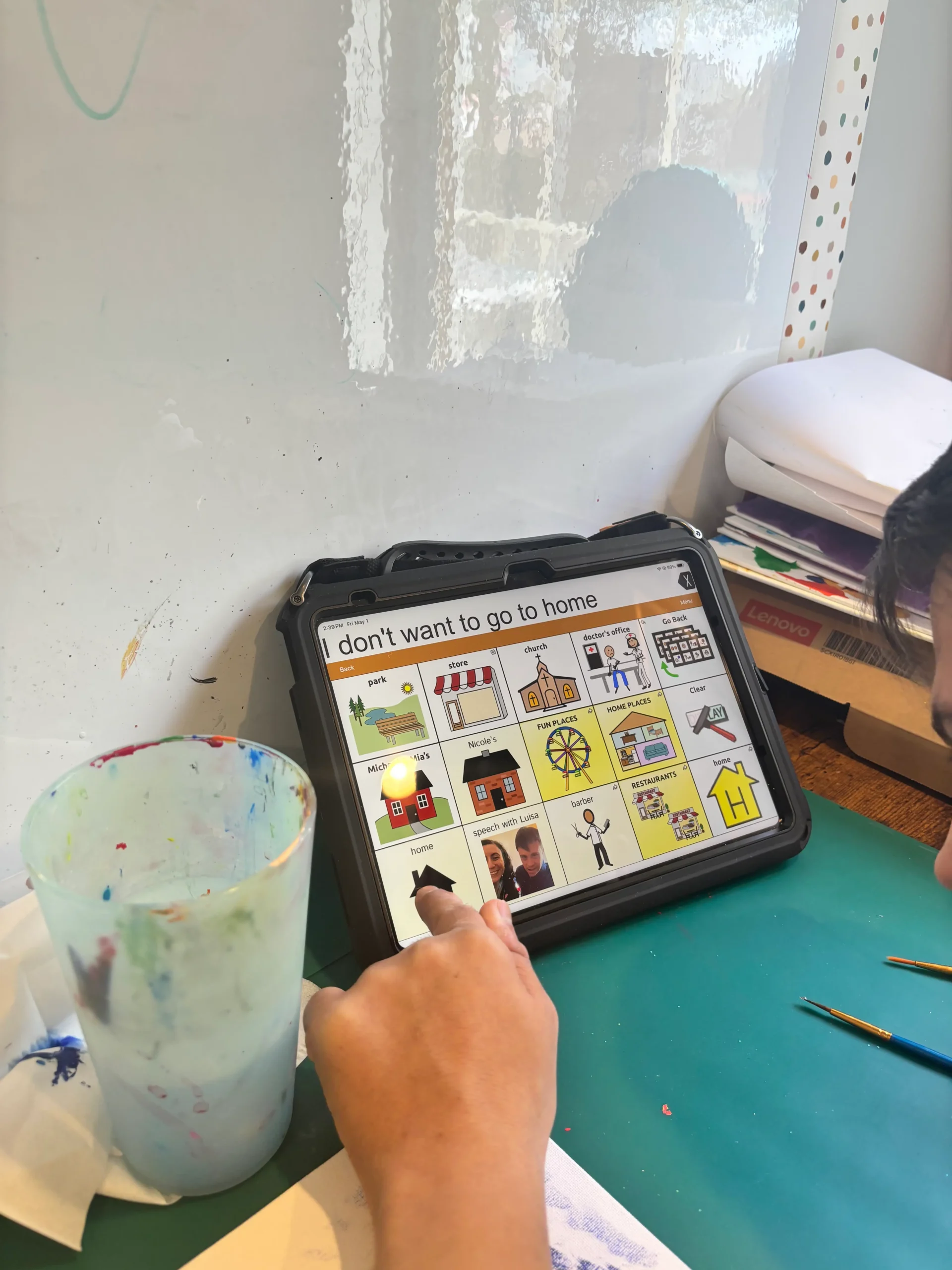
At The Therapy Garden, we believe that every individual has a voice, it’s our job to help them find the most effective way to share it. For many families in Monmouth County, the acronym "AAC" (Augmentative and Alternative Communication) can feel a bit overwhelming at first. You might be wondering: “If my child uses a tablet to speak, will they ever try to use their own voice?” or “Is this just a fancy way of giving up on verbal speech?”
Today, we’re pulling back the curtain on AAC technology. We’re here to debunk the myths, showcase the incredible power of modern tools, and help you understand how technology acts as a bridge, not a barrier, to your child’s communication and confidence.
What Exactly is AAC? (It’s More Than Just an App!)
AAC stands for Augmentative and Alternative Communication.
- Augmentative means it adds to someone’s speech.
- Alternative means it provides a different way to communicate when speech isn't an option.
While AAC can be as simple as pointing to a picture (low-tech), today’s technology has opened doors we never thought possible. From specialized apps on an iPad to dedicated high-tech eye-gaze systems, technology allows your child to say exactly what they are thinking, exactly when they want to say it.
The Biggest Myth: “Technology Will Stop My Child From Speaking”
If there is one thing we want you to take away from this post, it is this: Research consistently shows that AAC actually supports and encourages natural speech development.
Think of it this way: when a child is struggling to find the right words, they often experience immense frustration. This frustration can lead to meltdowns or a complete withdrawal from social interaction. By introducing a high-tech AAC device, we remove the "bottleneck." Your child can finally communicate their needs, which lowers their stress and actually makes them more interested in communicating overall.
The Truth: AAC provides a consistent motor map and clear auditory feedback. When a child presses a button for "Apple," they hear the word "Apple" every single time in the same clear voice. This repetition actually helps the brain map out the language, often leading to an increase in verbal attempts. It’s not a "last resort", it’s a powerful tool for success.

High-Tech AAC: How Modern Devices Empower Your Child
We live in an age where technology is a natural part of daily life. For a child with communication challenges, a tablet isn’t just for games, it’s their voice. Here’s why we love using technology in our sessions:
1. Robust Vocabulary
Unlike a physical binder of pictures (which can get heavy and limited), high-tech apps like Proloquo2Go or TouchChat allow for thousands of words. This means your child isn’t just limited to asking for "juice", they can tell you they are "frustrated," describe a "glittery" butterfly, or tell a joke.
2. Speed and Portability
Modern devices are sleek and easy to carry. Whether you’re at a local park in Hazlet or a restaurant in Red Bank, your child has their voice right there with them.
3. Personalization
We can program specific names of family members, favorite toys, or even the specific order they like at their favorite local spot. This makes the technology feel personal and relevant to their real world.
Functional Success: Real-World Communication
At The Therapy Garden, we don't just teach children how to press buttons in a vacuum. Our goal is functional communication. We want to see your child:
- Mastering the Art of Connection: Being able to say "I love you" or "Look at this!" to a sibling.
- Building Independence: Ordering their own snack or asking for a break when they feel overwhelmed.
- Creating Friendships: Using their device to join in a game or say "Hi" to a peer.
Our therapy focuses on practical, real-world skills. We want our clients to move beyond basic requests and start sharing their unique personalities with the world.

Is Your Child "Ready" for Technology?
Another common concern we hear is, "My child isn't ready for a high-tech device yet."
Here is a supportive reminder: There are no prerequisites for AAC. Your child doesn’t need to prove they can use a "low-tech" board before they are allowed to use a tablet. In fact, waiting can often lead to missed opportunities for language growth. If your child is struggling to be understood, they are ready to explore tools that can help.
We look at each child’s unique patterns and strengths. We don't see "deficits": we see potential waiting to be unlocked. Whether your child has autism, a speech delay, or another developmental need, technology can be the key that opens the door.
Why Choose The Therapy Garden for AAC Guidance?
Navigating the world of speech therapy and insurance can be a lot. We’re here to be your partner in success. We provide:
- Individualized Care: Our trained therapists work one-on-one with your family to find the right device and the right software.
- Supportive Environment: We offer a low-pressure setting where you and your child can feel comfortable exploring new ways to connect.
- Transparency: We provide Rapid Insurance Checks to make the process as smooth as possible for you.
- Proven Results: We’ve seen firsthand how the right technology can transform a child’s life, giving them the confidence to engage with the world around them.

Take the First Step: Free Consultation
You don’t have to figure this out alone. If you’ve been wondering if AAC could be the right fit for your loved one, we’re here to help. We offer Free Consultations to discuss your child's needs and how our pediatric speech therapy services can support their journey.
We currently have limited openings for our individualized speech therapy sessions in Monmouth County. Don't wait to give your child the tools they need to be heard.
Contact us today to secure a spot and start your journey toward transformative communication.
No obligation. No pressure. Just genuine support from a team that cares about your family’s progress as much as you do. Let’s build your child’s voice, together.