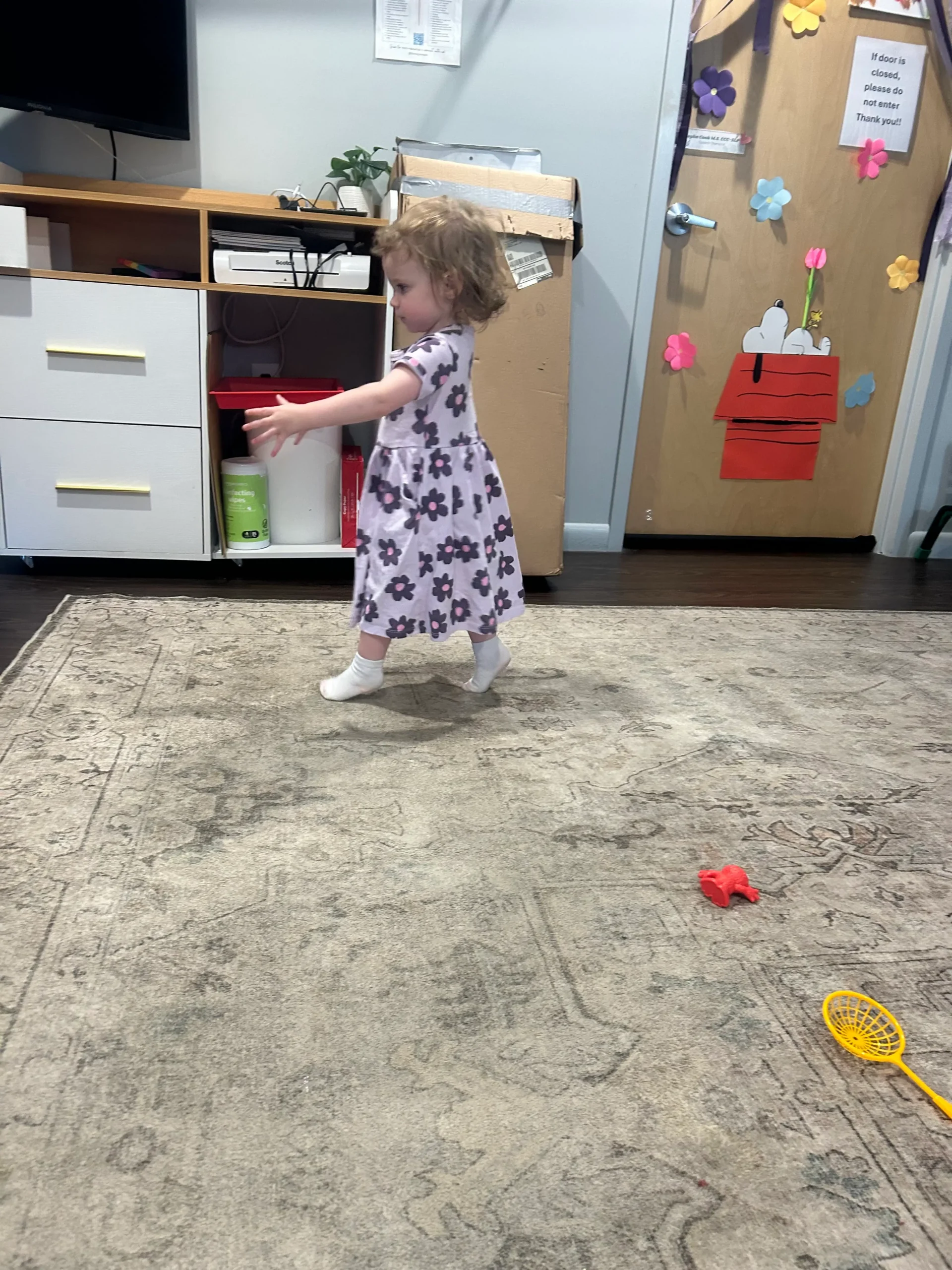
We’ve all been there. You’re at the kitchen table, and your little one is frustrated. Maybe they’re tugging at your sleeve, pointing vaguely toward the counter, or starting to let out that high-pitched "I’m-about-to-melt-down" squeal.
Your instinct, born out of a desire to help them succeed, is to say those three famous words: “Use your words.”
It sounds like great advice, right? We want to encourage them to communicate. We want to move away from the screaming and toward the talking. But for a child with a language delay, hearing “use your words” can feel like being asked to solve a complex calculus equation while someone is shouting at you in a foreign language.
At The Therapy Garden, we see this struggle every day. We know you’re coming from a place of love and a deep desire to empower your child. But the truth is, for many kids, this common phrase is actually a roadblock to progress.
Let’s talk about why this happens and, more importantly, what you can do instead to truly support your child’s communication journey.
The Invisible Hurdle: Why "Use Your Words" Backfires
When we tell a child to "use your words," we are making a lot of big assumptions. We are assuming they have the word, they can find it in their brain under pressure, and they have the physical motor skills to say it out loud at that exact moment.
For a child receiving speech therapy for language delay, any one of those steps can be a massive hurdle.
1. It Assumes the Skill is Already There
If your child had the words and the ability to use them in that moment of frustration, they almost certainly would. Communication is the path of least resistance. Kids don’t choose to scream because it’s fun; they scream because their current toolkit doesn't have a better tool. Asking them to "use your words" is like asking someone to use a hammer when they haven't been given one yet.
2. Stress Shuts Down the "Language Center"
Think about a time you were incredibly angry or overwhelmed. Did you find it easy to give a clear, articulate speech about your feelings? Probably not. When a child is dysregulated, their "thinking brain" (the part that handles language) goes offline. The "feeling brain" takes over. In that state, the demand to "use words" only adds more stress, making it even harder for them to access the vocabulary they do have.
3. It Ignores the Beauty of Total Communication
At The Therapy Garden, we believe that all communication is valid. Whether it’s a gesture, a look, a sign, or a tap on an AAC (Augmentative and Alternative Communication) device, it counts! When we say "use your words," we inadvertently send the message that their other attempts to connect don't matter.

Strategies That Actually Work (And Build Confidence!)
If we’re retiring "use your words," what goes in its place? Here are five heart-centered, professional strategies we use in our Monmouth County clinic that you can start using at home today.
1. Give Them the "Script" (Modeling)
Instead of asking them to find the words, give them the words. If you know they want the juice, don't make them "work" for it by guessing. Model it clearly and simply.
- Instead of: "Use your words. What do you want?"
- Try: "Juice. You can say, 'Juice, please.'"
By providing the model, you are teaching them the exact tool they need for next time. It lowers the pressure and provides a clear map for their brain to follow.
2. Narrate the Moment (Parallel Talk)
Think of yourself as a sports commentator for your child’s life. Describe what they are doing, seeing, and likely feeling. This builds their "inner dictionary" without putting them on the spot to perform.
- Example: "You're reaching for the blue truck. You want the big truck! Vroom vroom."
This strategy, often called "Parallel Talk," is a cornerstone of effective speech therapy. It surrounds the child with meaningful language that is directly tied to what they care about in the moment.

3. The Power of Choice
Demands create pressure; choices create empowerment. If your child is struggling to communicate a need, offer two visual options along with the words.
- Example: Hold up a cracker and a piece of cheese. "Do you want cracker or cheese?"
This narrows the "search field" in their brain from "everything in the world" to just two options. It’s much easier for a child with a language delay to grab, point to, or attempt the word for one of two choices than to generate a request from scratch.
4. Respect the "10-Second Wait"
We live in a fast-paced world, but language processing takes time: especially for neurodivergent kiddos or those with speech delays. After you model a word or ask a question, count to ten in your head.
Give them the space to process the sounds, formulate a response, and try to get it out. Often, we jump in too quickly to "rescue" them, which actually takes away their opportunity to practice.
5. Validate the Feeling First
Sometimes, the best thing you can do for communication is to stop talking about "words" and start talking about "feelings." When a child feels heard, their nervous system calms down, and language becomes more accessible.
- Try: "I see you’re frustrated. You really wanted that toy. I’m here to help."

We’re Your Partners in Success
Navigating a language delay can feel overwhelming, but you don't have to do it alone. At The Therapy Garden, we don't just work with your child; we partner with you.
Our approach is functional and inclusive. Whether we're practicing social skills in our DDD-approved groups or working on articulation in a one-on-one pediatric session, our goal is always the same: Real-world results. We want to see your child making friends, ordering their own snacks, and feeling the pride that comes with being understood.
We know that every child has a unique pattern of strengths. Our job is to find the "sunshine" that helps those strengths grow.
Ready to see your child blossom?
If you’re in Monmouth County and looking for a supportive, "no-obligation" environment to explore your child’s speech and language needs, we’re here to help.
- Individualized Care: Every child gets a plan tailored to their unique needs.
- Rapid Insurance Checks: We make the paperwork easy so you can focus on your family.
- Genuine Support: We’re more than a clinic; we’re a community.
Click here to schedule a Free Consultation and let's turn those frustrations into breakthroughs together. Your child has so much to say: let’s give them the tools to say it, their way.